The Best Baby White Noise Machine Is Free — And It Runs in Your Browser

Every new parent learns the same lesson: babies do not sleep in silence. After nine months of constant noise in the womb—blood flow, heartbeat, muffled voices, digestive sounds—a perfectly quiet nursery is actually unsettling to a newborn. That is why pediatricians, sleep consultants, and the American Academy of Pediatrics (AAP) all recommend white noise as part of a healthy sleep environment.
The problem is that dedicated sound machines cost $30–80, subscription-based apps charge $5–10/month, and free apps are loaded with ads that can wake your baby at the worst possible moment. We built a Baby Sound Machine that solves all of this. It runs entirely in your browser, plays seven different sounds, includes a fullscreen night-light mode, and costs nothing. No app to download. No account to create. No ads.
Want to try it right now? Seven calming sounds with a built-in night light, completely free.
Play White Noise Now →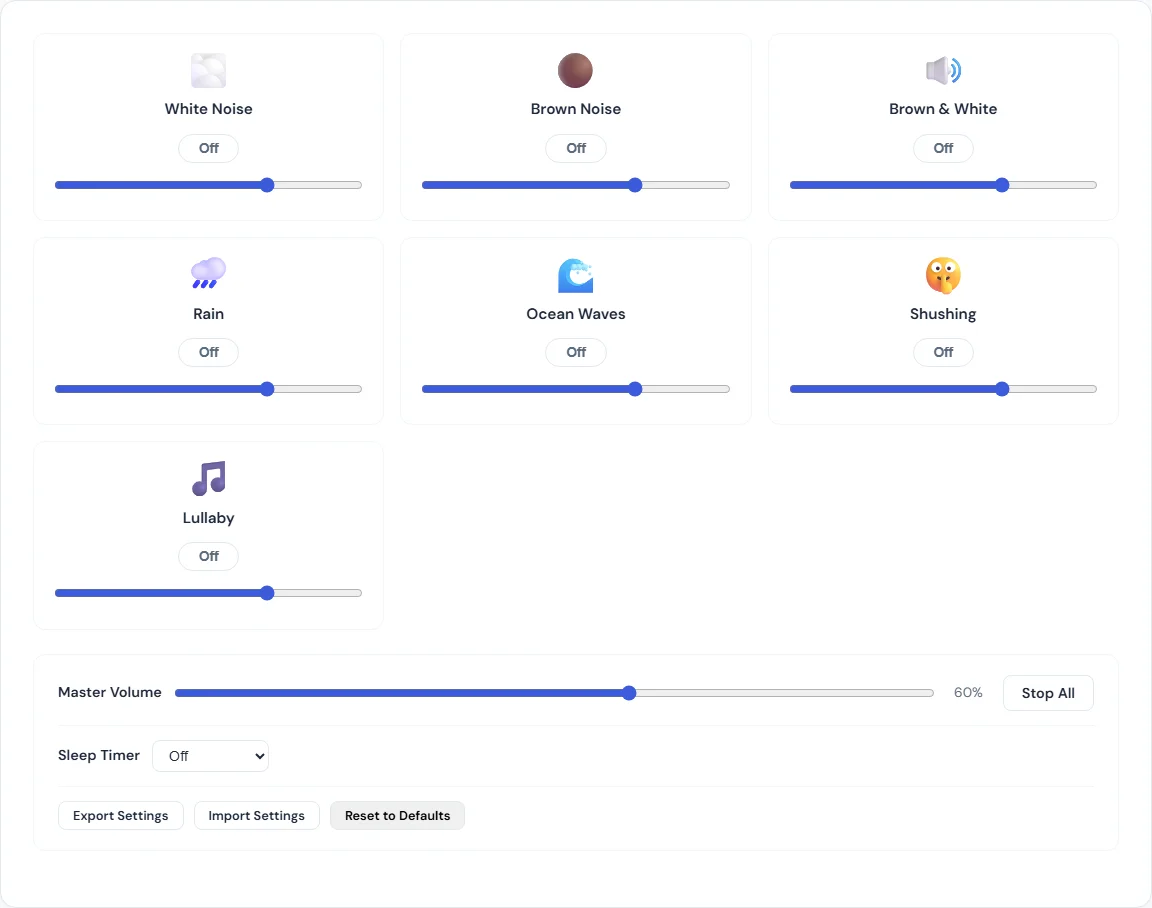
Why White Noise Works for Babies
The science behind white noise and infant sleep is well-documented. A frequently cited study published in Archives of Disease in Childhood found that 80% of newborns fell asleep within five minutes when exposed to white noise, compared to only 25% in a control group. Here is why it works:
It Mimics the Womb
Inside the womb, ambient noise levels are roughly 70–90 decibels—comparable to a vacuum cleaner running constantly. Continuous sound is what babies are used to. White noise recreates that baseline hum and signals to the baby's brain that the environment is safe and familiar.
It Masks Disruptive Sounds
A door closing, a dog barking, an older sibling laughing, dishes clanking in the kitchen—any sudden noise can startle a sleeping baby. White noise creates a consistent sound floor that absorbs these disruptions. The baby does not hear silence punctuated by a loud noise; they hear a steady sound that remains unchanged.
It Helps With the Startle Reflex
Newborns have a strong Moro (startle) reflex that causes them to jerk awake, sometimes from their own movements. White noise has been shown to reduce the frequency of startle responses during sleep, helping babies stay asleep through their natural sleep cycles.
It Becomes a Sleep Cue
Over time, the sound of white noise becomes associated with sleep. When the baby hears it, their brain begins the process of winding down. This conditioned response makes bedtime routines more effective and helps with nap transitions.
AAP Safe Sleep Guidelines for Sound Machines
The AAP supports the use of white noise with some important guidelines:
- Keep the volume at or below 50 decibels. This is roughly the level of a quiet conversation or light rain. Louder than that can potentially affect hearing over extended exposure. Place the sound source across the room from the crib, not right next to the baby's head.
- Use continuous sounds, not intermittent ones. Steady white noise, rain, or ocean waves are better than sounds with pauses or sudden changes (birdsong, music with variable dynamics). The goal is a consistent sound floor.
- Turn it off once the baby is in deep sleep (optional). Some experts recommend using a timer to turn off the sound machine after 30–60 minutes. Others say running it all night is fine as long as the volume is appropriate. The key is keeping it at a safe volume level.
The Sleep Foundation notes that white noise is one of the most effective non-pharmacological sleep aids for infants, with consistent evidence supporting its use when following safe volume guidelines.
What the Tool Offers
The Baby Sound Machine includes seven sounds that cover the range of what works for different babies:
- White Noise — The classic. A consistent, even hiss across all frequencies. This is the most commonly recommended sound for newborns.
- Brown Noise — Deeper and richer than white noise, with more bass. Many adults prefer this for sleep too. It sounds like a low rumble or a heavy waterfall.
- Brown & White Blend — A mix of both, giving you the depth of brown noise with the higher-frequency coverage of white noise. Good for babies who do not respond to one alone.
- Rain — Steady rainfall. Natural, calming, and one of the most universally soothing sounds for people of all ages.
- Ocean Waves — Gentle, rhythmic waves. The natural ebb and flow creates a subtle variation that some babies find more calming than static noise.
- Shushing — A rhythmic "shhhh" sound that mimics what parents naturally do to soothe a crying baby. Based on Harvey Karp's "5 S's" method, shushing is one of the most effective calming techniques for newborns.
- Lullaby — A gentle, looping lullaby melody for wind-down time. Use this during the bedtime routine, then switch to white noise or rain for actual sleep.
Each sound has its own volume slider, and you can play multiple sounds simultaneously. Want rain with a base layer of brown noise? Just turn both on and adjust the mix. The tool saves your settings so your preferred combination loads automatically next time.
The Night-Light Mode
This is the feature that replaces the second device on your nightstand. Click the fullscreen night-light button and your screen becomes a soft, ambient glow in the color of your choice. The tool includes preset colors:
- Warm amber — The most sleep-friendly color. Amber/red light does not suppress melatonin production the way blue or white light does.
- Soft red — Even less stimulating than amber. Some nurseries use red night lights exclusively.
- Cool blue — Not ideal for sleep but useful during nighttime feedings when you need slightly more visibility.
- Soft green, lavender, and white — Additional options depending on your preference.
In night-light mode, the screen dims to a gentle glow. The sound continues playing. You get a sound machine and a night light from a single browser tab on a phone or tablet propped up on the dresser.
Sleep Timer
Set a timer for 15 minutes, 30 minutes, 1 hour, or 2 hours. When the timer expires, the sounds fade out gradually rather than stopping abruptly. No sudden silence to startle the baby awake. This follows the recommendation of some sleep experts to not run white noise all night, while still covering the critical first stretch of falling asleep.
Why Not Just Buy a Sound Machine?
Dedicated hardware sound machines are fine. The Hatch Rest, Yogasleep Dohm, and LectroFan are all popular options. But they have limitations:
- Cost. $30–80 for the device, plus some (like Hatch) require a monthly subscription for premium sounds and features.
- Portability. You have to pack it when you travel, visit grandparents, or go to a hotel. If you forget it, you are out of luck. A browser-based tool works on any device with a speaker.
- Sound variety. Most hardware machines have 4–6 sounds. You cannot layer them or customize the mix.
- Night light bundling. Only premium models include a night light, and color options are often limited or locked behind a subscription.
The browser-based approach is not meant to replace a dedicated device if you already have one. But if you are deciding whether to buy one, or if you need a backup for travel, or if you just want to try white noise before spending money, this tool does everything you need for free.
Tips for Getting the Most Out of White Noise
Start From Day One
Newborns respond most strongly to white noise because the womb memory is fresh. Introducing it early also builds the sleep association sooner.
Volume Check
Download a free decibel meter app on your phone and measure the volume at the crib. Aim for 50 dB or below. If you are using a phone or tablet as the sound source, place it across the room, not in the crib.
Consistency Matters
Use the same sound for every nap and bedtime. Switching sounds frequently weakens the sleep cue association. Pick one that works and stick with it.
Pair It With a Routine
White noise alone is not a magic solution. It works best as part of a consistent bedtime routine: dim the lights, change into pajamas, feed, turn on the sound machine, and put the baby down. The routine tells the brain that sleep is coming; the white noise reinforces it.
Wean Gradually If Needed
Most children naturally outgrow the need for white noise between 1–3 years old. If you want to wean earlier, gradually reduce the volume over several weeks rather than stopping cold turkey.
Get Started
Open the Baby Sound Machine, pick a sound, adjust the volume, and try it tonight. If your baby responds to it, save the settings and use the same combination every night. If you need to figure out the right nap and bedtime schedule, pair it with the Baby Sleep Schedule Calculator to dial in wake windows by age. And if you want to track your baby's developmental progress alongside their sleep, the Baby Milestone Tracker covers 100+ CDC milestones from 2–24 months.
BLIPP built SmarterSources to replace expensive subscriptions with free, private tools. Every tool runs in your browser — no sign-ups, no limits.